April 16, 2026 at 12:43 p.m.
The Call of the Loon — Why the Loons Need Our Help
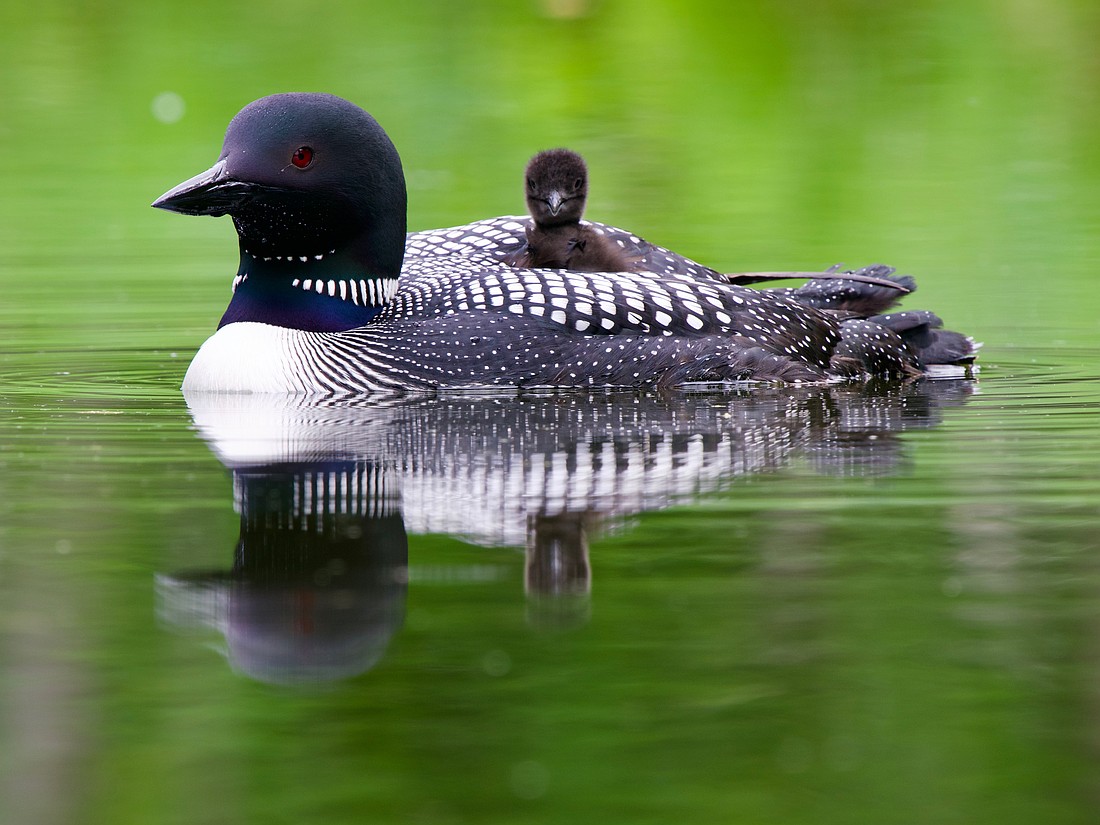
Every fall, families across Minnesota say goodbye to one of the most beloved residents of northern lakes—the Common Loon. As winter fades into spring, many lake lovers eagerly await the return of their haunting calls: the wail, tremolo, yodel, and hoot that signal the start of another season on the water.
For many of us, watching loons build nests, lay eggs, and raise their chicks is one of the most magical parts of lake life. These striking black-and-white birds have become an iconic symbol of northern wilderness and are deeply connected to the culture and identity of Minnesota.
But across North America, loons are facing serious challenges. For more than three decades, biologist Walter Piper, a professor at Chapman University in Orange, California has studied loons in northern Wisconsin since 1993 (loonproject.org). In 2021 he initiated a parallel investigation of loons in Crow Wing and Cass counties. Dr. Piper investigates territoriality, social behavior, and population dynamics of loons in both states. However, his research has revealed alarming declines in both breeding success and survival of young adult loons.
Loon populations are showing a population declining across a large portion of their breeding range—from Washington state to Maine and north into Alaska and Canada. Even more concerning is the drop in survival rates for young loons. In the 1990s, Wisconsin research data showed about 45% of juvenile loons survived, but today that number has fallen to around 10%. The research data also found that chick mass has declined across the 100-lake Wisconsin study area over the past several decades, which is disturbing because it’s well known that smaller and lighter juvenile loons have lower chances of making it to adulthood.
Doug Tozer, a Canadian scientist and Director of Waterbirds and Wetlands at Bird Canada, has similar concerns. On the American Birding Association website, he wrote an article called “Common Loon Secrets” which talks about Loons and the challenges they are facing.
Why is this happening?
The quick answer: We don’t know—yet. In 2021, the Loon and Diver Research Working Group was formed to tackle this very question. This international group of over 30 loon researchers is supported by the Loon Preservation Committee in the U.S. and Birds Canada. Researchers point out several major factors that might explain the decline, climate change, declining water quality, the loss of shoreline habitat, and human-caused injuries and deaths.
The good news is that many of these problems can be addressed by people who live, fish, and enjoy recreational activities on lakes. As stewards of these waters, we have the power to protect the lakes where loons return to year after year.
To learn more, please go to the following websites.
https://www.aba.org/common-loon-secrets/ or www.Loonproject.org
Let’s look at why climate change is one of the factors for the Loon population decline. According to the National Oceanic and Atmospheric Administration, the last decade includes the ten warmest years on record. Warmer temperatures are changing lake ecosystems in several ways: shorter ice seasons, increased rainfall and runoff, warmer water temperatures and shifting fish populations.
These changes can reduce water quality and increase mercury levels in lakes, both harmful to loons, fish and humans. To learn more: https://www.climate.gov/news-features/understanding-climate/climate-change-global-temperature
Dr. Walter Piper warns that if warming trends continue, loon populations could gradually move farther north into Canada. For communities across the northern United States, that loss would be profound. The call of the loon is more than just a sound—it’s part of the identity of our lakes.
On Earth Day, Wednesday on April 22nd, please take time to learn more about how you can help protect our planet for our future generations. Make a change today!
https://www.epa.gov/climate-change/what-you-can-do-about-climate-change
• Refuse, Reduce, Reuse, Repair, Recycle
• Shop Smart and Recycle Thoughtfully
• Fight Food Waste – reduce food waste by shopping smart, buying only what you, donating unused food to food banks or shelters and composting food scraps.
• Everyday Actions Add Up - reusable water bottles and containers. Compost your food scraps, yard trimmings, and other organic waste. Use reusable rags, sponges, mops, and other cleaning products. When possible, pay bills via e-billing programs to save paper.
Protecting Loons doesn’t require dramatic changes, just awareness and stewardship. By improving water quality, protecting shorelines, using lead-free fishing tackle, and respecting loon habitat, lake communities can help ensure that future generations will continue to hear the haunting call of the loon across Minnesota waters.
In the next few weeks, we will continue to look at what we can do to help the Loons, as we get ready to open our cabins for the season and look forward to the fishing opener.
Photo by Laura Mellum

Comments:
You must login to comment.