December 2, 2022 at 8:49 p.m.
DNR suggested general ice thickness guidelines
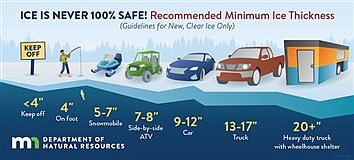
The DNR does not measure ice thickness on Minnesota lakes. Your safety is your responsibility. Learn about the different ways to check ice thickness before heading out.
Temperature, snow cover, currents, springs and rough fish all affect the relative safety of ice. Ice is seldom the same thickness over a single body of water; it can be two feet thick in one place and one inch thick a few yards away.
Ice thickness guidelines for new, clear ice only.
UNDER 4”: Stay off
4”: Ice fishing or other activities on foot
5” - 7”: Snowmobile or small ATV
7” – 8”: Side-by-side ATV
9” – 10”: Small car or SUV
11” -12”: Medium SUV or small truck
13”: Medium truck
16” -17”: Heavy duty truck
20”+: Heavy duty truck with wheellhouse shelter
DNR recommendations are based on average equipment weight and assume solid, clear ice. You are responsible for knowing the weight of your vehicle, equipment, and bodies.
Many factors other than thickness affect ice strength, including air temperature, wind, snow, streams, narrow areas or bottlenecks, sun, shade, fish communities, plant decay, and more. When a layer of snow melts and refreezes on top of lake ice, it creates white ice, which is only about half as strong as new, clear ice. Double the above thickness guidelines when traveling on white ice.
Learn more about white ice and other common factors that can cause ice to be unsafe at https://www.dnr.state.mn.us/safety/ice/thickness.html?utm_medium=email&utm_source=govdelivery
Frozen lakes are not parking lots - cars, pickups or SUVs should be parked at least 50 feet apart and moved every two hours to prevent sinking. Stationary loads (longer than two hours) require thicker ice than the standard guidelines. Tip: Make a hole next to the car. If water starts to overflow the top of the hole, the ice is sinking and it’s time to move the vehicle.

Comments:
You must login to comment.